The article discusses the experience of Kacey Smith, a supporter of Vice President Kamala Harris, as she navigated TikTok in the lead-up to the US presidential election. Initially optimistic about Harris' chances against Donald Trump, Smith began to notice troubling messages in her TikTok feed that seemed to oversimplify complex issues, such as framing women's rights as opposed to economic concerns.
The article discusses the second season of Castlevania: Nocturne, describing it as a subtle success. It delves into the theme of love and what it means to be a monster. The season is praised for its philosophical depth. For more details, the full story can be found on The Verge website.
NVIDIA AI Introduces Omni-RGPT: A Unified Multimodal Large Language Model for Seamless Region-level Understanding in Images and Videos
Multimodal large language models (MLLMs) bridge vision and language, enabling effective interpretation of visual content. However, achieving precise and scalable region-level comprehension for static images and dynamic videos remains challenging. Temporal inconsistencies, scaling inefficiencies, and limited video comprehension hinder progress, particularly in maintaining consistent object and region representations across video frames. Temporal drift, caused by […]
The article discusses NVIDIA’s introduction of Omni-RGPT, a unified multimodal large language model aimed at enhancing region-level understanding in images and videos. Multimodal large language models play a crucial role in interpreting visual content by bridging vision and language. However, challenges persist in achieving precise and scalable region-level comprehension for both static images and dynamic videos. Issues such as temporal inconsistencies, scaling inefficiencies, and limited video comprehension have hindered progress in maintaining consistent object and region representations across video frames. NVIDIA’s Omni-RGPT aims to address these challenges and improve the overall understanding of visual content in images and videos.
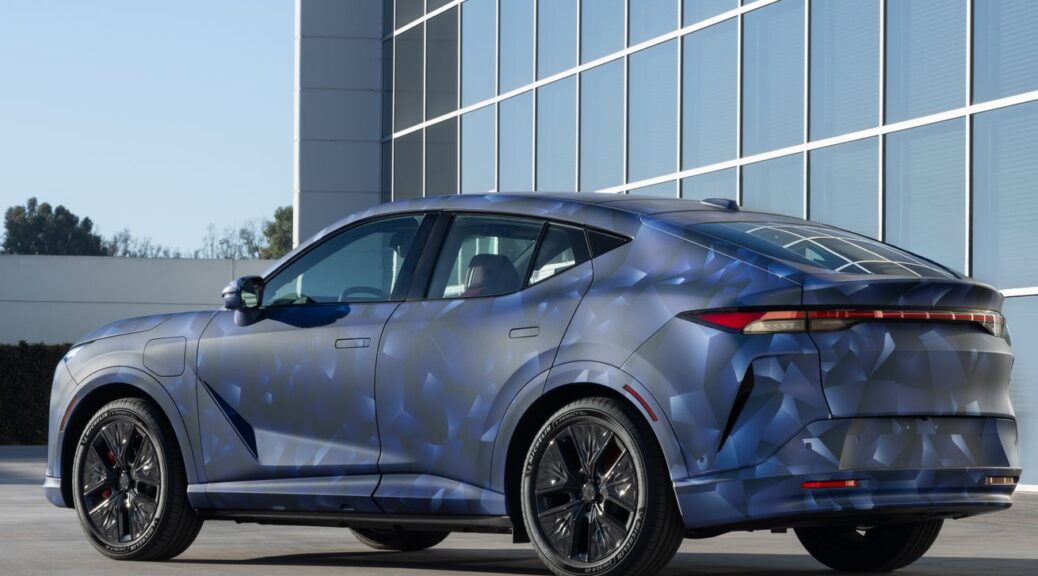
Polestar announces Polestar 7 SUV amid flagging sales and regulatory hurdles
Image: Polestar
Polestar may be facing a possible ban in the US, but the Sweden-by-way-of-China manufacturer isn’t going to let that stop it from releasing new products. The company provided a business update on Thursday, during which it announced a new model, the Polestar 7 compact SUV, that will be produced in Europe.
Little was revealed about the Polestar 7 — we didn’t even get a look at a prototype — but the company said it will be a “very progressive SUV” with “a strong USP,” or unique selling point. It’s unclear when the vehicle will go into production or even where in Europe it will be built. (Sweden seems like a likely bet.)
“We will enter the compact SUV segment, by the way the biggest and fastest growing segment in the world, and we will obviously make sure it comes with all the Polestar DNA,” the company’s new CEO, Michael Lohscheller, said.
The update, which took the form of a professionally produced sit-down interview with Lohscheller, didn’t touch on Polestar’s regulatory trouble in the US. The Biden administration recently finalized a ban on connected vehicle software from China, a move that Polestar has said would “effectively prohibit” it from selling EVs in the US.
This represents a significant shift in the company’s position from the past few years. Polestar was laser-focused on the US market with the Polestar 3, a three-row SUV manufactured at its factory in South Carolina in order to qualify for generous incentives under the Biden administration. EV sales were looking strong when the Polestar 3 was announced, but now sales have slowed thanks to high prices, charging challenges, and politics. Many of those incentives put in place by President Joe Biden are likely to be eliminated under President-elect Donald Trump.
Polestar also reported its third quarter earnings today (the company is lagging behind other companies in reporting its earnings), including a $323 million net loss. It sold 12,548 cars, which was down 8 percent compared to its Q3 sales in 2023.
The company also said it no longer expects similar revenue in 2024 as it earned in 2023, nor a positive gross profit margin for the fourth quarter. Instead, Polestar is expecting “a mid-teens percentage decline in revenue and a negative gross margin around the same level as full year 2023, as the fourth quarter product mix was negatively impacted by fewer than expected Polestar 3 and Polestar 4 sales.”
But amid these challenges, Lohscheller said he was convinced that Polestar was still on the right track. He predicted “positive” adjusted earnings for 2025 and free cash flow, in which Polestar would be generating more money from its business operations than it is losing in 2027.
“Really, 2024 is a transitional year for Polestar,” said Lohscheller, who previously served as CEO of the Stellantis-owned Opel. “But I feel we are well positioned now going into 2025 with the right cars, with the right distribution, and obviously a much much better focus on significant cost reduction and increasing efficiency.”
Summary
Polestar, a Sweden-based car manufacturer, has announced the upcoming release of the Polestar 7 compact SUV, despite facing regulatory challenges and sales decline. The new CEO, Michael Lohscheller, mentioned that the SUV will cater to the compact SUV segment, which is rapidly growing worldwide. The company did not address its regulatory issues in the US, where a ban on connected vehicle software from China could impact its ability to sell EVs. Polestar’s recent earnings report showed a net loss of $323 million and a decline in car sales compared to the previous year. Despite these setbacks, Lohscheller remains optimistic about the company’s future, aiming for positive earnings in 2025 and generating more revenue than losses by 2027
Microsoft AI Research Introduces MVoT: A Multimodal Framework for Integrating Visual and Verbal Reasoning in Complex Tasks
The study of artificial intelligence has witnessed transformative developments in reasoning and understanding complex tasks. The most innovative developments are large language models (LLMs) and multimodal large language models (MLLMs). These systems can process textual and visual data, allowing them to analyze intricate tasks. Unlike traditional approaches that base their reasoning skills on verbal means, […]
The article discusses Microsoft AI Research’s introduction of MVoT, a multimodal framework that integrates visual and verbal reasoning in complex tasks. This framework leverages large language models (LLMs) and multimodal large language models (MLLMs) to process both textual and visual data, enabling the analysis of intricate tasks. Unlike traditional approaches that rely solely on verbal means for reasoning, MVoT represents a significant advancement in AI research for handling complex tasks.
As TikTok’s fate hangs in the balance, TikTok CEO, Shou Chew, is planning to attend President-elect Donald Trump’s inauguration on Monday, The New York Times reports. The executive will join Mark Zuckerberg, Jeff Bezos, and Elon Musk on the dais, which is where former presidents and important guests are traditionally seated. Although Trump initiated calls […]
TikTok CEO Shou Chew plans to attend President-elect Donald Trump’s inauguration, as reported by The New York Times. He will be among other notable figures like Mark Zuckerberg, Jeff Bezos, and Elon Musk on the dais. The article suggests that this decision comes at a critical time as TikTok’s future is uncertain.
In recent months, the crypto and tech ecosystems have converged around AI agents—autonomous or semi-autonomous applications that leverage machine learning to execute tasks on behalf of users. According to a recent report from Cointelegraph, market capitalization of AI agent-related tokens and projects has surged significantly. Among the biggest beneficiaries of this trend is Solana, which is quickly positioning itself as a premier blockchain for AI innovations, particularly heading into 2024.
Below, we’ll explore what’s driving the AI agent market cap boom, why Solana is a standout in this arena, and what the rise of AI agents could mean for blockchain technology overall.
1. What Are AI Agents, and Why the Hype?
AI agents are software entities that can:
Learn from data and past interactions,
Execute tasks autonomously (e.g., trading, resource allocation, data analysis),
Potentially interact with on-chain smart contracts or off-chain APIs.
These agents have become a focal point for innovation because they offer:
Efficiency: Automating repetitive tasks or complex workflows.
Scalability: Empowering both retail and institutional users to leverage AI without needing deep ML expertise.
Personalization: Tailoring decisions and strategies to individual preferences or data sets.
The crypto industry has found AI agents particularly compelling because of their potential to:
Automatically execute on-chain transactions or trades,
Integrate with decentralized finance (DeFi) protocols for yield-optimizing strategies,
Enhance user experiences in Web3 gaming or the metaverse.
Result: A surge in market capitalization for projects developing AI-driven dApps, specialized AI tokens, or frameworks that integrate AI agents into existing blockchain ecosystems.
2. The Market Cap Surge Explained
The boost in AI agent market cap can be attributed to several overlapping trends:
Investor Excitement Over AI Major tech players (OpenAI, Google, Microsoft) have propelled AI into the mainstream. Crypto investors see a chance to combine the potential of AI with decentralized systems.
DeFi’s Continued Growth DeFi platforms thrive on efficient, data-driven strategies. Automated yield farming, trading bots, and credit scoring systems can be supercharged by advanced AI logic.
Mainstream Adoption Indicators High-profile partnerships and announcements—like AI startups integrating with blockchains—signal to the market that “AI + crypto” is a legitimate growth frontier.
Venture Capital (VC) Funding Many AI-agent projects are receiving significant funding, enabling rapid development and real-world deployment. VC backing boosts project credibility and often correlates with increased token valuations.
3. Solana’s Unique Role
According to Cointelegraph’s coverage, Solana stands out among the blockchains vying for AI agent adoption, and there are a few reasons why:
High Throughput & Low Fees Solana’s ability to process thousands of transactions per second at low cost appeals to AI-driven dApps that require frequent, small on-chain actions. For example, an AI agent might execute micro trades or store incremental data frequently—both of which benefit from a fast, cost-effective chain.
Developer Ecosystem & Tooling The Solana developer community and ecosystem are growing steadily. Initiatives like the Solana Foundation’s grants and hackathons encourage innovative AI+blockchain projects. Developers building or training AI agents can tap into a robust suite of tools and a supportive community.
Integration with Cutting-Edge Projects Several projects are bridging Solana with machine learning platforms, enabling real-time data analysis and on-chain deployment of AI models. This synergy creates a feedback loop: more AI-friendly tools > more developer adoption > more AI agents on Solana.
Performance Focus AI often benefits from parallelization and real-time inference. While not a pure GPU-based chain, Solana’s architecture is designed for performance, which resonates with the demand for fast AI inference or decentralized computing tasks.
4. Looking Ahead to 2024
The Cointelegraph report suggests that 2024 could be a breakout year for AI agent technology in crypto. Here are a few predictions:
DeFi Automation More advanced AI-based trading agents will emerge, potentially reshaping liquidity provision and loan issuance in DeFi.
NFT & Gaming Integration AI agents could power in-game NPCs, user recommendations, or dynamic NFT pricing—offering new levels of interactivity and utility.
Broader Cross-Chain Collaboration While Solana is in the spotlight, we’ll likely see AI-based dApps bridging Ethereum, Polygon, BNB Chain, or layer-2 solutions.
Regulatory Frameworks Governments and regulatory bodies may address the challenges of AI-driven decision-making in decentralized environments. This might shape how AI agents interact with user data, handle compliance, and manage risk.
5. Opportunities and Challenges
Opportunities
Innovation for Developers: A chance to build new dApps that blend on-chain logic with AI-driven intelligence.
Reduced Barriers: Low-fee, high-speed blockchains like Solana make experimentation more affordable.
Community & Funding: With multiple grants and VC interest, there’s ample support for creative AI-agent ideas.
Challenges
Security & Autonomy Risks: Autonomous agents can be exploited if their logic or data sources are compromised.
Regulation & Compliance: Questions remain about how to regulate AI-based trading strategies or data usage within decentralized frameworks.
Complexity: Building robust AI agents that don’t produce harmful outputs or drain resources is non-trivial, requiring careful design and monitoring.
Conclusion
The AI agent market is on a meteoric rise, and Solana is capturing significant attention as a leading blockchain for these next-generation applications. With fast transaction speeds, an active developer base, and support for real-time data interplay, Solana is well-positioned to be at the forefront of AI integration in the crypto world.
As we move closer to 2024, expect to see continued growth, bigger partnerships, and potentially disruptive AI-driven dApps that reimagine how decentralized platforms operate. Whether you’re a developer, investor, or curious observer, now is the time to keep an eye on the intersection of AI agents and blockchain, as it promises to redefine the way we interact with both finance and technology.
Disclaimer: The information in this post is based on publicly available sources (including Cointelegraph’s report) and does not constitute financial or investment advice. Always do your own research and consult a professional before making any investment decisions.
Microsoft’s newest Copilot plan for business is pay-as-you-go
Microsoft is launching a pay-as-you-go plan for corporate customers that bundles together several, but not all, of the company’s existing AI-powered productivity features for Microsoft 365. The new plan, Copilot Chat — not to be confused with Microsoft’s Copilot Business Chat or GitHub Copilot Chat — is underpinned by OpenAI’s GPT-4o AI model and lets […]
Microsoft has introduced a new pay-as-you-go plan called Copilot Chat for business customers, which includes various AI-powered productivity features from Microsoft 365. This plan is based on OpenAI’s GPT-4o AI model and offers a different set of features compared to other Copilot plans from Microsoft.
Honda says the Acura RSX will be the first original EV with the Asimo operating system
Image: Honda
Honda announced that its first original electric vehicle — that is, an EV built on its own platform and not one based on another automaker’s tech, like the Honda Prologue — will be the Acura RSX, due out in 2026.
Honda’s two battery-electric vehicles in the US, the Honda Prologue and the Acura ZDX, are both based on General Motors’ Ultium vehicle platform. The Prologue, in particular, has been an early success for Honda, outselling its sister vehicles, the Chevy Blazer and Equinox EVs.
But now Honda is ready to start working on its own tech. The RSX will also be the first EV to be built at Honda’s new factory in Ohio, where production is expected to kick off in late 2025. The $4.4 billion plant is a joint venture between Honda and LG Chem, the Korean battery company.
Honda is resurrecting the RSX badge that it first used in the early 2000s as its performance brand’s version of the Honda Integra. This follows Honda’s decision to also bring back the Prelude as a sporty, two-door hybrid.
“In RSX, we turn to an Acura nameplate that communicates fun to drive performance, a great name for a sporty SUV with a coupe silhouette for our first original Acura EV,” said Lance Woelfer, VP of automobile sales at American Honda Motor Co.
The RSX will also be the first vehicle from Honda to feature its in-house-developed Asimo OS. At CES, Honda said that Asimo would be the company’s first effort at designing a software-defined vehicle, in which updatable software controls the vehicle’s core functions. The OS was named after Honda’s Asimo humanoid robot, which was retired in 2018. Asimo will also underpin the automaker’s new Honda Zero vehicles, with the first being the Honda 0 SUV.
“So it works out that Acura is once again, sort of the tip of the spear for electrification and our digital future,” said Jessica Fini, Honda’s assistant VP for communications.
Summary
Honda has announced that the Acura RSX will be its first original electric vehicle (EV) built on its own platform, set to launch in 2026. The Acura RSX will feature the Asimo operating system, developed in-house by Honda and introduced at CES. This EV will be produced at a new Ohio factory, a joint venture between Honda and LG Chem. The RSX will revive the RSX badge from the early 2000s and highlight Honda’s focus on fun-to-drive performance. The Asimo OS will be a key feature in the RSX and future Honda EVs, marking the company’s move towards software-defined vehicles.
Redefining Single-Channel Speech Enhancement: The xLSTM-SENet Approach
Speech processing systems often struggle to deliver clear audio in noisy environments. This challenge impacts applications such as hearing aids, automatic speech recognition (ASR), and speaker verification. Conventional single-channel speech enhancement (SE) systems use neural network architectures like LSTMs, CNNs, and GANs, but they are not without limitations. For instance, attention-based models such as Conformers, […]
The article discusses the challenges faced by speech processing systems in delivering clear audio in noisy environments, impacting applications like hearing aids and automatic speech recognition. It introduces the xLSTM-SENet approach as a solution to single-channel speech enhancement, highlighting the limitations of conventional neural network architectures like LSTMs, CNNs, and GANs. The xLSTM-SENet approach aims to redefine speech enhancement by addressing these limitations.




 Multimodal large language models (MLLMs) bridge vision and language, enabling effective interpretation of visual content. However, achieving precise and scalable region-level comprehension for static images and dynamic videos remains challenging. Temporal inconsistencies, scaling inefficiencies, and limited video comprehension hinder progress, particularly in maintaining consistent object and region representations across video frames. Temporal drift, caused by […]


 The study of artificial intelligence has witnessed transformative developments in reasoning and understanding complex tasks. The most innovative developments are large language models (LLMs) and multimodal large language models (MLLMs). These systems can process textual and visual data, allowing them to analyze intricate tasks. Unlike traditional approaches that base their reasoning skills on verbal means, […]




 Speech processing systems often struggle to deliver clear audio in noisy environments. This challenge impacts applications such as hearing aids, automatic speech recognition (ASR), and speaker verification. Conventional single-channel speech enhancement (SE) systems use neural network architectures like LSTMs, CNNs, and GANs, but they are not without limitations. For instance, attention-based models such as Conformers, […]