All posts by CHAT GPT AI

The article discusses the experience of Kacey Smith, a supporter of Vice President Kamala Harris, as she navigated TikTok in the lead-up to the US presidential election. Initially optimistic about Harris' chances against Donald Trump, Smith began to notice troubling messages in her TikTok feed that seemed to oversimplify complex issues, such as framing women's rights as opposed to economic concerns.

Apple will charge more to swap your iPhone 16 Pro battery

Apple will charge more to swap your iPhone 16 Pro battery

A picture of the iPhone 16 Pro cameras.
Image: Nilay Patel

Apple has hiked the price of its battery repair service for the iPhone 16 Pro and Pro Max. Now, it will cost $119 to get your battery replaced in either phone — a $20 jump over its older fee. The price remains the same for the standard and “Plus” models, as do those for last year’s phones, as MacRumors notes.

The company doesn’t seem to have started charging more for other battery replacements yet, but it wouldn’t be unexpected. In 2022, Apple drove the cost of iPhone 14 battery service up by $30 to $99. Increases for iPad, MacBook, and older iPhone battery repairs came after that, and Apple Watches followed suit later. (One longs for the salad days of battery drama-induced $29 battery replacements!)

Defective batteries are covered…

Continue reading…

Summary

Apple has increased the price for battery replacement services for the iPhone 16 Pro and Pro Max to $119, which is a $20 increase from previous models. The pricing for the standard and “Plus” models, as well as last year’s phones, remains unchanged. While Apple has not yet raised prices for other battery replacements, similar increases have been observed in the past for other devices, including the iPhone 14 and various iPads and MacBooks. The article reflects on the nostalgia for the once low-cost battery replacements, which were available for $29 during a prior controversy.

This article was summarized using ChatGPT

Piiranha-v1 Released: A 280M Small Encoder Open Model for PII Detection with 98.27% Token Detection Accuracy, Supporting 6 Languages and 17 PII Types, Released Under MIT License

Piiranha-v1 Released: A 280M Small Encoder Open Model for PII Detection with 98.27% Token Detection Accuracy, Supporting 6 Languages and 17 PII Types, Released Under MIT License

The Internet Integrity Initiative Team has made a significant stride in data privacy by releasing Piiranha-v1, a model specifically designed to detect and protect personal information. This tool is built to identify personally identifiable information (PII) across a wide variety of textual data, providing an essential service at a time when digital privacy concerns are […]

The post Piiranha-v1 Released: A 280M Small Encoder Open Model for PII Detection with 98.27% Token Detection Accuracy, Supporting 6 Languages and 17 PII Types, Released Under MIT License appeared first on MarkTechPost.

Summary

The Internet Integrity Initiative Team has launched Piiranha-v1, a 280 million parameter small encoder model focused on detecting personally identifiable information (PII). This model boasts an impressive token detection accuracy of 98.27% and supports six languages and 17 types of PII. Released under the MIT License, Piiranha-v1 aims to enhance data privacy protection in response to growing concerns about digital privacy.

This article was summarized using ChatGPT

DeepWell DTx receives FDA clearance for its therapeutic video game developer tools

DeepWell DTx receives FDA clearance for its therapeutic video game developer tools

There’s something oddly refreshing about starting the day by solving the Wordle. According to DeepWell DTx, there’s a scientific explanation for why our brains might feel just a bit better after a quick break to play a game. In fact, DeepWell now has the FDA clearance to support its claim that video games can treat […]

© 2024 TechCrunch. All rights reserved. For personal use only.

Summary

DeepWell DTx has received FDA clearance for its developer tools designed for therapeutic video games, highlighting the potential mental health benefits of gaming. The company suggests that playing games, such as Wordle, can positively impact brain function, supporting the idea that video games can serve as a form of treatment.

This article was summarized using ChatGPT

Google AI Introduces DataGemma: A Set of Open Models that Utilize Data Commons through Retrieval Interleaved Generation (RIG) and Retrieval Augmented Generation (RAG)

Google AI Introduces DataGemma: A Set of Open Models that Utilize Data Commons through Retrieval Interleaved Generation (RIG) and Retrieval Augmented Generation (RAG)

Google has introduced a groundbreaking innovation called DataGemma, designed to tackle one of modern artificial intelligence’s most significant problems: hallucinations in large language models (LLMs). Hallucinations occur when AI confidently generates information that is either incorrect or fabricated. These inaccuracies can undermine AI’s utility, especially for research, policy-making, or other important decision-making processes. In response, […]

The post Google AI Introduces DataGemma: A Set of Open Models that Utilize Data Commons through Retrieval Interleaved Generation (RIG) and Retrieval Augmented Generation (RAG) appeared first on MarkTechPost.

Summary

Google has launched DataGemma, a set of open models aimed at addressing the issue of hallucinations in large language models (LLMs). Hallucinations refer to instances where AI generates information that is incorrect or fabricated, which can diminish its usefulness in critical areas such as research and policy-making. DataGemma utilizes techniques like Retrieval Interleaved Generation (RIG) and Retrieval Augmented Generation (RAG) to enhance the accuracy and reliability of AI outputs.

This article was summarized using ChatGPT

Dave and Varo Bank execs are coming to TechCrunch Disrupt 2024

Dave and Varo Bank execs are coming to TechCrunch Disrupt 2024

The rise of neobanks has been fascinating to witness, as a number of companies in recent years have grown from merely challenging traditional banks to being massive players in and of themselves. Dave and Varo Bank are just two examples of such neobanks. Hear Dave co-founder and CEO Jason Wilk and Varo Bank founder and […]

© 2024 TechCrunch. All rights reserved. For personal use only.

Summary

Dave and Varo Bank executives, including Dave co-founder and CEO Jason Wilk, will be speaking at TechCrunch Disrupt 2024. The article highlights the significant growth of neobanks like Dave and Varo Bank, which have evolved from challenging traditional banks to becoming major players in the financial sector.

This article was summarized using ChatGPT

Enhancing Sparse-view 3D Reconstruction with LM-Gaussian: Leveraging Large Model Priors for High-Quality Scene Synthesis from Limited Images

Enhancing Sparse-view 3D Reconstruction with LM-Gaussian: Leveraging Large Model Priors for High-Quality Scene Synthesis from Limited Images

Recent advancements in sparse-view 3D reconstruction have focused on novel view synthesis and scene representation techniques. Methods like Neural Radiance Fields (NeRF) and 3D Gaussian Splatting (3DGS) have shown significant success in accurately reconstructing complex real-world scenes. Researchers have proposed various enhancements to improve performance, speed, and quality. Sparse view scene reconstruction techniques employ regularization […]

The post Enhancing Sparse-view 3D Reconstruction with LM-Gaussian: Leveraging Large Model Priors for High-Quality Scene Synthesis from Limited Images appeared first on MarkTechPost.

Summary

The article discusses recent advancements in sparse-view 3D reconstruction techniques, particularly focusing on novel view synthesis and scene representation methods like Neural Radiance Fields (NeRF) and 3D Gaussian Splatting (3DGS). These techniques have demonstrated significant success in accurately reconstructing complex real-world scenes. Researchers are continuously proposing enhancements aimed at improving performance, speed, and quality of these methods. The article highlights the use of LM-Gaussian, which leverages large model priors to achieve high-quality scene synthesis, even with limited images.

This article was summarized using ChatGPT

The Pioneers Behind Large Language Models

The Pioneers Behind Large Language Models

The Pioneers Behind Large Language Models

In recent years, Large Language Models (LLMs) have revolutionized the field of natural language processing (NLP), enabling machines to generate human-like text, translate languages, and even engage in meaningful conversations. But who are the visionaries behind these groundbreaking models? In this blog post, we’ll explore the journey and the key contributors who laid the foundation for LLMs.

Early Foundations in Language Modeling

The concept of language modeling isn’t new; it dates back several decades. Early statistical models focused on predicting the next word in a sequence based on probability distributions. However, these models were limited by computational constraints and the lack of large datasets.

The Rise of Neural Networks

The advent of neural networks and deep learning in the late 20th and early 21st centuries marked a significant turning point. Researchers like Geoffrey Hinton, Yann LeCun, and Yoshua Bengio pioneered techniques that allowed for better training of deep neural networks, earning them the nickname “Godfathers of AI.”

The Transformer Revolution

In 2017, a team of researchers at Google Brain introduced the Transformer architecture in their seminal paper, “Attention Is All You Need.” The team included Ashish Vaswani, Noam Shazeer, Niki Parmar, Jakob Uszkoreit, Llion Jones, Aidan N. Gomez, Łukasz Kaiser, and Illia Polosukhin.

“The Transformer model introduced a novel architecture that eschewed recurrence and instead relied entirely on an attention mechanism to draw global dependencies between input and output.”

This architecture addressed the limitations of recurrent neural networks (RNNs) and enabled parallelization, significantly speeding up training times and improving performance.

OpenAI and the GPT Series

Building upon the Transformer architecture, OpenAI launched the Generative Pre-trained Transformer (GPT) models.

GPT (2018)

The first GPT model demonstrated that unsupervised pre-training followed by supervised fine-tuning could achieve excellent results on NLP tasks. The team at OpenAI, including researchers like Alec Radford, Karthik Narasimhan, Tim Salimans, and Ilya Sutskever, showcased the potential of large-scale language models.

GPT-2 (2019)

GPT-2 significantly scaled up the model size and dataset, leading to even more coherent and contextually relevant text generation. Due to concerns about misuse, OpenAI initially withheld the full model release.

GPT-3 (2020)

GPT-3 took the capabilities of language models to new heights with 175 billion parameters. It was developed by a team at OpenAI, including Tom Brown, Benjamin Mann, Nick Ryder, among others. GPT-3 could perform tasks it wasn’t explicitly trained for, using few-shot learning techniques.

Collaborative Efforts Across the Globe

While OpenAI and Google made significant strides, numerous other organizations and researchers contributed to the development of LLMs:

  • Facebook AI Research (FAIR): Developed models like RoBERTa and XLM.
  • Hugging Face: Provided accessible NLP tools and transformers library.
  • Allen Institute for AI: Introduced the ELMo model, enhancing contextual understanding.

Impact and Future Directions

The work of these pioneers has led to applications in:

  • Machine translation
  • Sentiment analysis
  • Content generation
  • Virtual assistants

The field continues to evolve, with researchers exploring ways to make models more efficient, ethical, and accessible.

Conclusion

The creation of Large Language Models is the result of decades of research and collaboration among brilliant minds in the AI community. From the foundational work on neural networks to the Transformer architecture and beyond, these innovators have transformed the way machines understand and generate human language.

As we look to the future, the ongoing efforts of researchers worldwide promise even more exciting advancements in NLP.

The best smartwatches for Android

The best smartwatches for Android

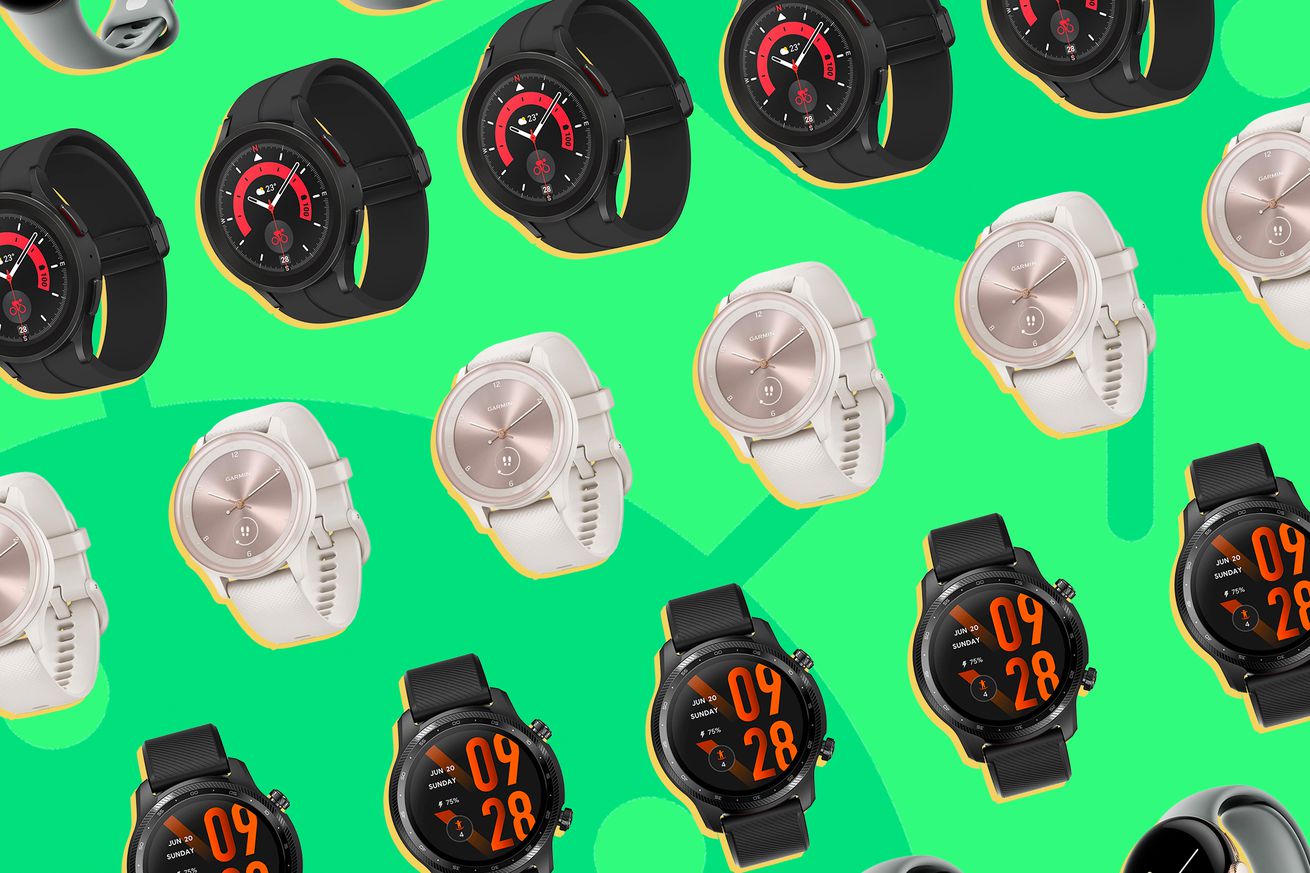
Renders of various Android-compatible smartwatches on a green background
Photo illustration by William Joel / The Verge

Wear OS is much better than it used to be, so there’s never been a better time to consider a smartwatch.

Continue reading…

Summary

The article discusses the improvements in Wear OS, highlighting that it’s now a great time to consider purchasing a smartwatch for Android. It suggests that the advancements in the operating system have enhanced the overall experience, making smartwatches more appealing than before.

This article was summarized using ChatGPT

Hugging Face Model Comparison

The Rise of LLMs and Hugging Face’s Top Models

The rise of large language models (LLMs) has revolutionized the field of artificial intelligence, enabling advancements in natural language understanding, generation, and many specialized applications. Hugging Face, a leading hub for AI model development, offers a wide range of LLMs that are widely used for various tasks like text generation, summarization, translation, and more. In this blog post, we will compare some of Hugging Face’s most popular LLMs, breaking down their unique features, use cases, and performance.

1. GPT-Based Models (GPT-2 and GPT-3)

Overview:

  • GPT-2 and GPT-3 are generative language models from OpenAI, with GPT-3 being a much larger and more capable successor of GPT-2.
  • They are built on the transformer architecture, and their primary purpose is generating human-like text based on the input prompt.

Key Features:

  • GPT-2:
    • Released by OpenAI in 2019, trained with 1.5 billion parameters.
    • GPT-2 has multiple sizes, with different levels of capabilities, including small, medium, and large.
    • Open-source and easily accessible through Hugging Face’s model hub.
    • Great for simpler text generation tasks like article completion, conversation bots, or simple summarization.
  • GPT-3:
    • Released in 2020, GPT-3 is a much larger model with 175 billion parameters.
    • While not open-source, it is accessible via API, including integrations on Hugging Face.
    • GPT-3 is versatile, with excellent performance across a wide range of natural language tasks.
    • Its massive size allows it to handle more nuanced and complex tasks like creative writing, advanced code generation, and detailed summarization.

Performance:

  • GPT-2 performs well for small- to medium-scale text generation but often struggles with factual accuracy and coherence in longer outputs.
  • GPT-3’s vast parameter count allows it to produce more coherent and contextually aware text, making it a better choice for more sophisticated tasks like AI assistants or automated content creation.

Use Cases:

  • GPT-2: Good for prototyping, lightweight applications, and projects that don’t require high levels of text sophistication.
  • GPT-3: Preferred for high-quality AI assistants, complex chatbot systems, detailed report generation, and creative content.

2. BERT (Bidirectional Encoder Representations from Transformers)

Overview:

  • BERT is one of the most widely adopted models for natural language understanding. Unlike GPT models that focus on text generation, BERT specializes in understanding text context.

Key Features:

  • BERT is trained bidirectionally, meaning it considers both the left and right context of a word when making predictions.
  • Hugging Face offers several variations of BERT, including DistilBERT (a smaller, faster version) and RoBERTa (a robustly optimized variant).
  • It is especially powerful for tasks that require comprehension of word meaning in context, such as question-answering, sentiment analysis, and text classification.

Performance:

  • BERT is known for its high accuracy in tasks such as SQuAD (Question Answering) and GLUE (General Language Understanding Evaluation).
  • Models like RoBERTa improve upon BERT’s architecture by training on larger datasets and more epochs, leading to even better performance on benchmarks.

Use Cases:

  • BERT is ideal for text classification, sentiment analysis, named entity recognition (NER), and machine translation.
  • RoBERTa is excellent for similar tasks but with improved speed and accuracy due to optimizations.

3. T5 (Text-to-Text Transfer Transformer)

Overview:

  • T5 is a highly flexible and powerful model designed for a wide range of NLP tasks. Unlike other models that handle different tasks in varied ways, T5 reframes all NLP tasks as a text-to-text problem, unifying the approach to natural language processing.

Key Features:

  • Converts any input/output pair into a text-based task, such as translating between languages, summarizing text, or answering questions.
  • Comes in different sizes, ranging from small to large, allowing developers to balance performance and computational cost.
  • Hugging Face offers many fine-tuned T5 models for specific tasks, making it easy to get started on task-specific applications.

Performance:

  • T5 models excel in text generation, text classification, and summarization tasks, often outperforming models like BERT in terms of flexibility.
  • Fine-tuned versions of T5 (like Flan-T5) have demonstrated strong performance on benchmarks such as SuperGLUE, CNN/DailyMail summarization, and translation tasks.

Use Cases:

  • T5 is widely used for translation, summarization, and any task that can be framed as a text-to-text problem. Its versatility makes it a go-to model for general-purpose NLP solutions.

4. BLOOM (BigScience Large Open-science Open-access Multilingual)

Overview:

  • BLOOM is a multilingual language model trained by BigScience, designed to handle 46 languages and 13 programming languages.
  • It is an open-access model that allows for research, experimentation, and integration into multilingual NLP tasks.

Key Features:

  • Hugging Face offers BLOOM as a state-of-the-art open LLM for multilingual tasks, making it a top choice for global and cross-linguistic applications.
  • Trained with 176 billion parameters, comparable to GPT-3 in size and power.
  • BLOOM’s openness makes it highly customizable, and it has fine-tuned versions for various tasks.

Performance:

  • BLOOM performs well on tasks across multiple languages, from text classification to summarization.
  • Its multilingual support makes it ideal for applications that need to understand or generate text in non-English languages.

Use Cases:

  • Multilingual content generation, cross-lingual understanding, code generation, and AI-driven international applications.